BLOG
Lead Generation for Logistics Companies: The Complete, Easy-to-Follow Guide


If you’re trying to get more clients—more loads, more lanes, more contracts, and more predictable revenue—but the leads just aren’t coming in consistently… you’re not alone.
Relying on old-school methods like cold calls, word-of-mouth, or waiting for brokers isn’t enough anymore. Customers search online, compare multiple providers, and expect responsiveness and reliability.
The good news? Generating logistics leads doesn’t have to be complicated.
Below is a simple, step-by-step guide designed specifically for trucking, freight, and logistics companies that want more qualified, ready-to-book clients in 2025.
Let’s dive in.
1. Know Your Ideal Customer (Your #1 Growth Lever)
Before you market or sell anything, get clear on who you want as a client.
Ask yourself:
Who needs my services most consistently?
(Manufacturers, importers, wholesalers, construction suppliers, brokers, e-commerce brands)What problems are they dealing with?
(Slow deliveries, unreliable carriers, high freight costs, poor tracking)Where do they go when they need a trucking partner?
(Google, referrals, industry groups, LinkedIn)
Action Step: Write down 3 types of customers who:
✔ pay well
✔ give repeat loads
✔ are easy to work with
This becomes your Ideal Customer Profile (ICP)—your compass for every marketing move.
2. Turn Your Website Into a Lead-Generating Machine
Your website is your 24/7 salesperson. If it’s not generating leads, you’re leaving money on the table.
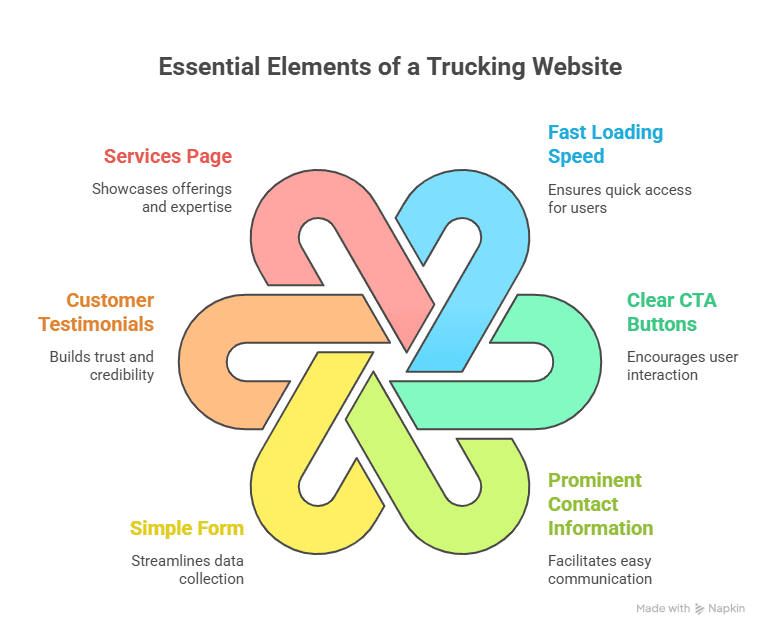
Your trucking/logistics website must have:
Fast loading speed (3 seconds or less)
Clear CTA buttons like “Request a Quote”
A big phone number or WhatsApp button
A simple form (Name, company, load type—keep it short)
Customer testimonials (trust = more bookings)
A services page with lanes, equipment, and industries served
Pro tip:
Use simple, human messaging like:
“Need a reliable trucking partner? Get a fast, free quote.”
Clear beats clever every time.
3. Use SEO to Get Found on Google (Free Long-Term Leads)
SEO sounds technical, but it’s simply making sure customers can find you.
Start with:
Add keywords like “trucking company in [city]” or “LTL shipping near me”
Write helpful blog posts answering common questions
Add lane pages (e.g., “Dallas to Houston Freight Service”)
Claim and optimize your Google My Business listing
Action Step: Google “[your freight service] + [your city]”
If you’re not on page one—you’re invisible.
4. Run Smart Ads (If You Want Fast Leads)
Ads can bring quick results, especially for busy lanes.
Best ad types for logistics:
Google Ads: Target high-intent keywords like “hire reefer trucking company”
Facebook Ads: Great for local businesses needing regular deliveries
LinkedIn Ads: Ideal for B2B targeting (operations managers, supply chain leaders)
Retargeting Ads: Show ads to people who visited your website but didn’t call
If ads aren’t converting within 30 days—adjust the targeting or messaging.
5. Show Up on Social Media (Where Your Buyers Hang Out)
You don’t need to post daily. But you should post consistently.
Best platforms for logistics:
LinkedIn: Connect with shippers, brokers, warehouse managers
Facebook: Great for local B2B and quick outreach
Instagram/TikTok: For showing your trucks, team, and proof of good service
Post ideas:
Your trucks on the road
Customer success stories
Tips like “How to prevent shipping delays”
Behind-the-scenes (loading, inspections, safety checks)
Buyers trust companies that look active and real.
6. Build an Email List—and Stay in Front of Your Leads
Not every lead will book immediately. Most won’t.
But if you stay in touch?
They’ll remember you when they need a shipment.
Simple logistics email strategy:
Offer a free resource like “5 Ways to Reduce Freight Costs”
Send short helpful emails once or twice a month
Stay top-of-mind with past customers
Share updates, promotions, and available capacity
Email is still one of the highest-ROI channels in logistics.
7. Network Like a Pro (Online + Offline)
The logistics business thrives on relationships.
Networking opportunities:
Join groups like ATA, state trucking associations, or logistics circles
Attend freight industry expos and trade shows
Build partnerships with brokers, warehouses, manufacturers
On LinkedIn, send simple messages like:
“Hey [Name], I’d love to connect. If you ever need reliable freight coverage on [lane], we’re here.”
One good relationship can lead to dozens of loads.
8. Track What Works (And Cut What Doesn’t)
You don’t need fancy software—just know what brings results.
Track these 3 metrics:
Website traffic (Are people visiting?)
Inbound leads (How many calls/quotes per week?)
Lead sources (Which channels bring the best customers?)
Every month:
Keep what works
Fix what doesn’t
Drop what wastes time
Consistency beats complexity.
Final Thoughts: Getting More Clients Doesn’t Need to Be Hard
You started a logistics company to move freight—not to become a marketing expert.
The truth is:
You don’t need complicated tools
You don’t need perfect content
You do need a simple, consistent plan
Pick ONE thing from this guide and do it this week:
Update your Google My Business
Send five LinkedIn connection requests
Post one customer testimonial
Add a “Request a Quote” button to your website
Small steps → big results.
If You Want the Fastest Path to Logistics Leads… Choose GrowthBeam
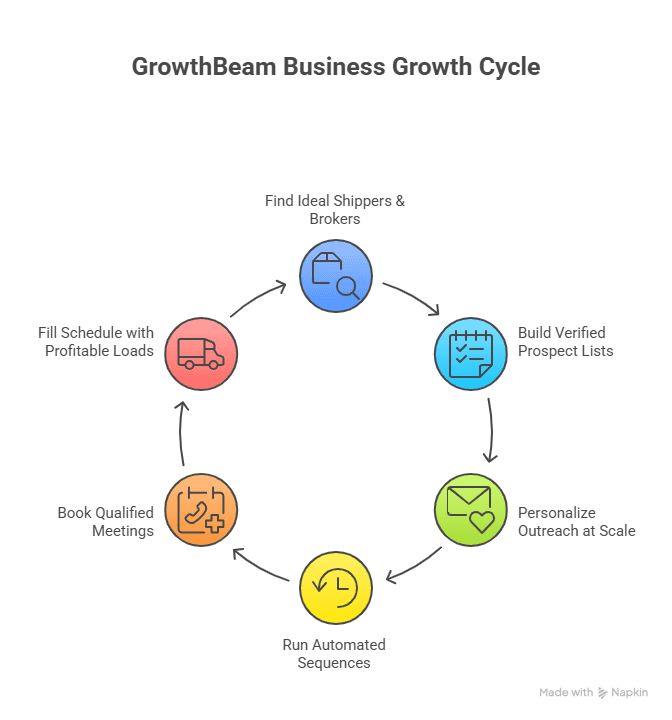
Instead of juggling ads, SEO, cold calls, and endless research, GrowthBeam gives logistics companies an all-in-one, AI-powered lead generation system built for trucking, freight, and logistics.
GrowthBeam helps you:
✔ Find ideal shippers & brokers
✔ Build verified prospect lists
✔ Personalize outreach at scale
✔ Run automated email + LinkedIn sequences
✔ Book qualified meetings with decision-makers
✔ Fill your schedule with real, profitable loads
No stress. No complicated tech.
Just more clients—faster.