BLOG
Lead Generation for Freight Forwarders: A Practical Guide to Winning More Bookings (2025)


If you run a freight forwarding desk, your success depends on one thing: consistently turning shipper interest into booked shipments. Digital marketplaces, rate engines, and global quote platforms make visibility easier — but turning visibility into qualified leads and booked freight still requires process, targeting, and timely outreach.
This guide translates the SeaRates / Digital Freight Alliance workflow into an actionable lead-generation playbook you can execute today. It’s focused on freight forwarders that want to be found by shippers, win more quotes, and convert marketplace hits into lasting customers.
Why forwarders need a modern lead-gen system (short answer)
Marketplaces and rate widgets increase reach, but they also increase noise. To convert enquiries into revenue you must:
Be discoverable where shippers search (marketplaces, logistics directories, SERPs).
Make it frictionless for shippers to request quotes.
Respond instantly and personally to high-intent shipping requests.
Use data and automation to prioritize the highest-probability leads.
Do that, and your pipeline becomes measurable, repeatable, and scalable.
1. Put your rates where buyers actually search (Marketplaces + Widgets)
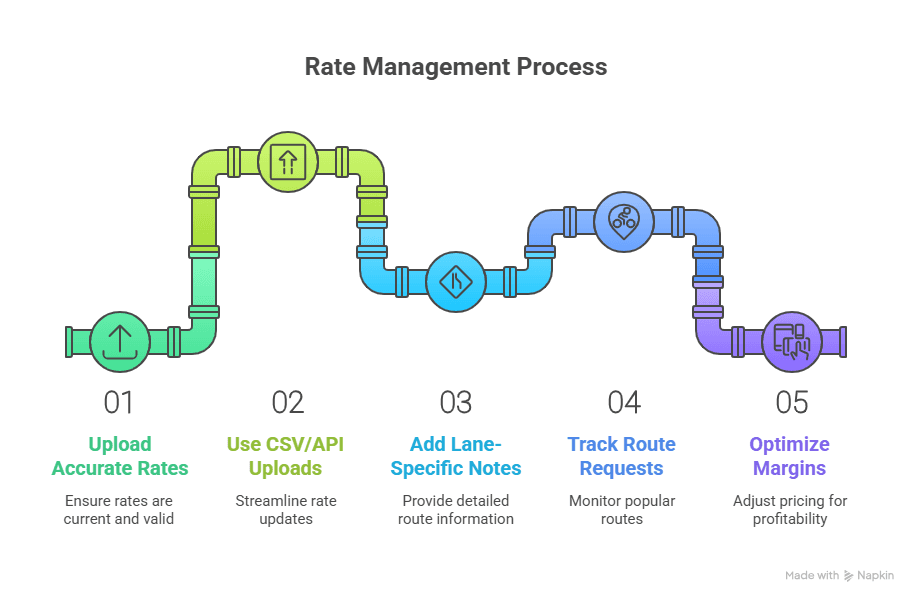
Listing tariffs on marketplaces like SeaRates and using Logistics Explorer-style widgets increases your discoverability across millions of shippers. But simply uploading rates isn’t enough — treat the marketplace as a sales channel:
Upload accurate rates (validity, transit times, service terms).
Use CSV/API uploads to keep rates fresh and avoid expired quotes.
Add lane-specific notes (ETA windows, surcharges, capacity constraints).
Track which routes generate requests and optimize margins accordingly.
Tactic: enable the “Quick Request” notifications and route these leads into a hot queue in your CRM — respond within the hour.
2. Capture and qualify every shipping lead fast
Every marketplace request is a live sales moment. Convert interest into opportunity by:
Collecting structured inputs (weight, incoterms, dates, commodity, ports).
Automatically enriching leads with firmographics (company size, industry, historical shipment volumes).
Applying a simple lead-scoring model (intent + value + deadline).
Routing hot leads to a rapid-response rep (phone + WhatsApp + email).
Goal: phone or personalized message within 60 minutes for hot requests.
3. Use the Logistics Explorer network to expand reach (partner amplification)
Premium listing advantages include distribution across partner platforms. Amplify reach by:
Syndicating your tariffs to partners and regional portals.
Allowing partners to present your rates (with brand or white-label options).
Tracking which partner referrals convert best — then doubling down on top referrers.
Measure: partner-sourced bookings, conversion rate, and margin by partner.
4. Turn quotes into conversations using rapid outreach
Marketplaces often give you contact data or a lead form. The highest converting freight forwarders follow a simple cadence:
Immediate confirmation message (automated): “We received your request — one of our specialists will call you in X minutes.”
Personalized ops call within the hour to confirm details and remove friction.
Send a one-page tailored solution (routing, lead time, provisional cost, next steps).
Close by proposing a short test shipment or pilot lane.
Scripts should be short, problem-first, and focused on removing blockers to booking.
5. Create frictionless booking paths (UX → conversion)
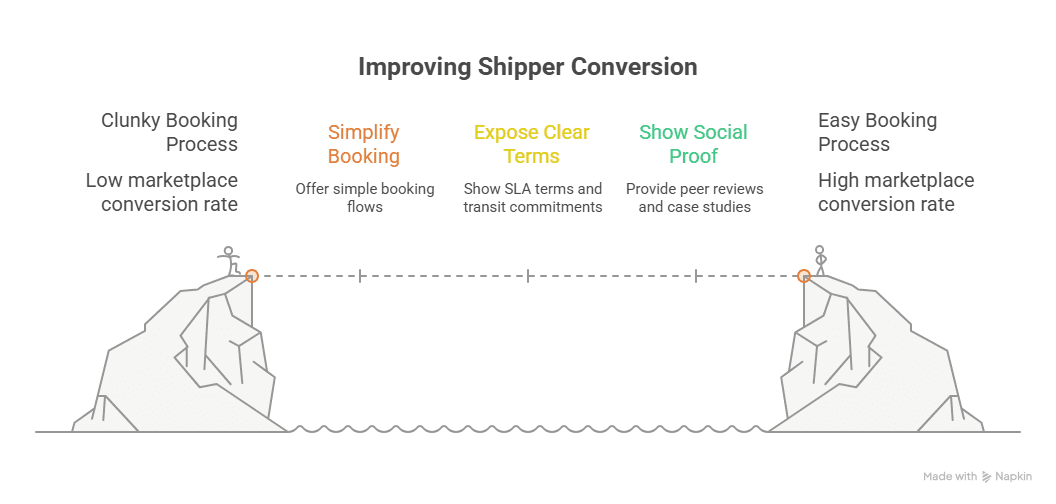
Shippers abandon quotes when the process is clunky. Improve conversion by:
Offering simple booking flows (book & pay / pro-forma invoice options).
Exposing clear SLA terms and transit commitments.
Showing social proof (peer forwarder reviews, sample case studies).
Providing instant follow-up collateral (ETA expectations, contact for exceptions).
The easier you make booking, the higher your marketplace conversion.
6. Use data to prioritize and personalize
Not all leads are equal. Prioritize those with the highest revenue potential:
Score by lane profitability, shipment frequency, and freight value.
Use intent signals (repeat searches, similar quote requests) to elevate urgency.
Personalize outreach based on prior interactions (past quotes, past shipments, preferred carriers).
Automation can do the heavy lifting: enrich leads, score them, and surface the top 10% for human follow-up.
7. Nurture non-immediate enquiries into future revenue
Many requests are informational or future-dated. Convert them into pipeline with a nurture program:
Triggered email sequences: value content (lane insights, customs tips) + case studies.
Calendar invites for a 15-minute “shipping health check” six weeks before required date.
Seasonal campaigns for recurring lanes (e.g., holiday retail surges).
Nurture converts low-intent lists into repeat customers over time.
8. Leverage partner referrals & marketplace reputation
Marketplace presence plus partner amplification produces compounding effects:
Run a referral program for agents and carriers who send you qualified leads.
Collect and publish short client testimonials tied to specific lanes/commodities.
Use marketplace analytics to spot high-yield geographies and replicate success.
Referral leads typically convert faster and at lower CAC.
9. Measure what matters (conversion by route, not vanity metrics)
Track the right KPIs to improve ROI:
Quote → booking conversion (by lane)
Time-to-first-response (minutes)
Average booking value and margin per lane
Lead source conversion (marketplace, partner, direct website)
Repeat-shipment rate (by account)
Optimize the funnel by A/B testing response templates, one-page proposals, and booking UX.
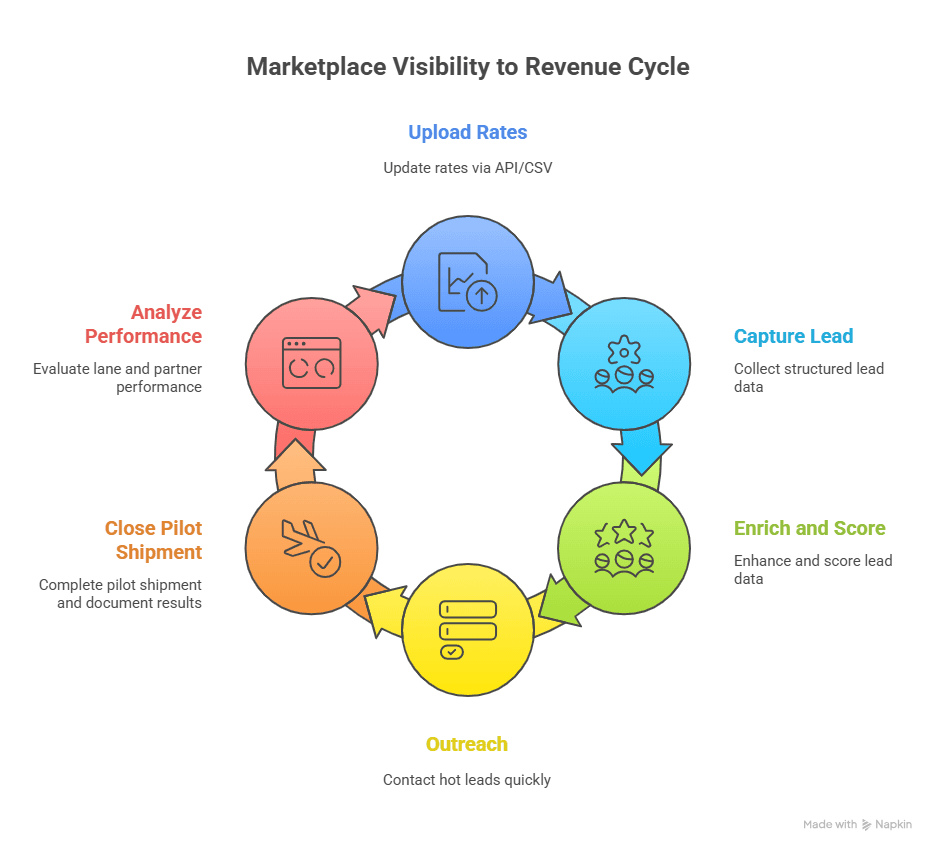
10. Operationalize the loop: Upload → Capture → Qualify → Book → Analyze
Make lead-gen a system, not a hope. A simple operational loop:
Upload rates and keep them current (via API/CSV).
Capture lead with structured data.
Auto-enrich + score.
Rapid human outreach on hot leads.
Close pilot shipment → deliver → document results → request referral.
Analyze performance by lane and partner → iterate.
This loop turns marketplace visibility into sustainable revenue.
Why GrowthBeam accelerates freight forwarder growth (non-salesy, practical)
SeaRates and Logistics Explorer are powerful discovery engines. GrowthBeam is the operational layer that turns those discovery moments into booked revenue fast.
GrowthBeam helps forwarders by:
Connecting marketplace leads to verified contact data so reps can call or message immediately.
Applying intent + value scoring so hot requests jump the queue.
Automating personalized follow-up cadences (SMS/WhatsApp + email + phone) to reduce time-to-first-contact.
Delivering reporting by lane, partner, and lead source so you stop guessing where revenue comes from.
Offering a managed pilot — GrowthBeam can run your first 30-day marketplace-to-booking pilot and hand you the playbook.
Put simply: marketplaces find shippers — GrowthBeam turns those finds into customers.
👉 Ready to test a 30-day pilot that converts SeaRates/marketplace enquiries into booked shipments? GrowthBeam will set up rate syncs, build a hot-lead workflow, and deliver the first set of qualified bookings — along with the messaging and KPI dashboard used.
7-day checklist to capture more marketplace leads
Sync your rate uploads (CSV/API) and set automated validity alerts.
Enable Quick Request notifications and route to a hot queue.
Create a 60-minute rapid-response SLA for hot leads.
Build a 1-page tailored proposal template per lane.
Set up automated enrichment + scoring for every lead.
Prepare a 30-day nurture sequence for informational leads.
Launch partner referral tracking and a simple reward.
Social + email snippets you can use now
LinkedIn post:
“Got marketplace leads sitting in your dashboard? Quick tip: respond within the hour, send a 1-page tailored plan, and offer a pilot lane. You’ll turn cold quotes into booked shipments. Need help operationalizing? GrowthBeam runs the pilot for you. #freightforwarding #3PL #logistics”
Email subject lines:
“Quick — 60-minute slot to confirm your [origin → destination] quote?”
“[Name], proposal attached: shipping [commodity] from [port] to [port]”
“Pilot offer: one shipment, guaranteed SLA — interested?”
WhatsApp/SMS opener:
“Hi [Name], we received your quote request for [route]. Can I confirm ETA & dimensions? We can guarantee loading + docs in X days.”