BLOG
B2B Lead Generation Solutions for Logistics Firms (2026 Guide)
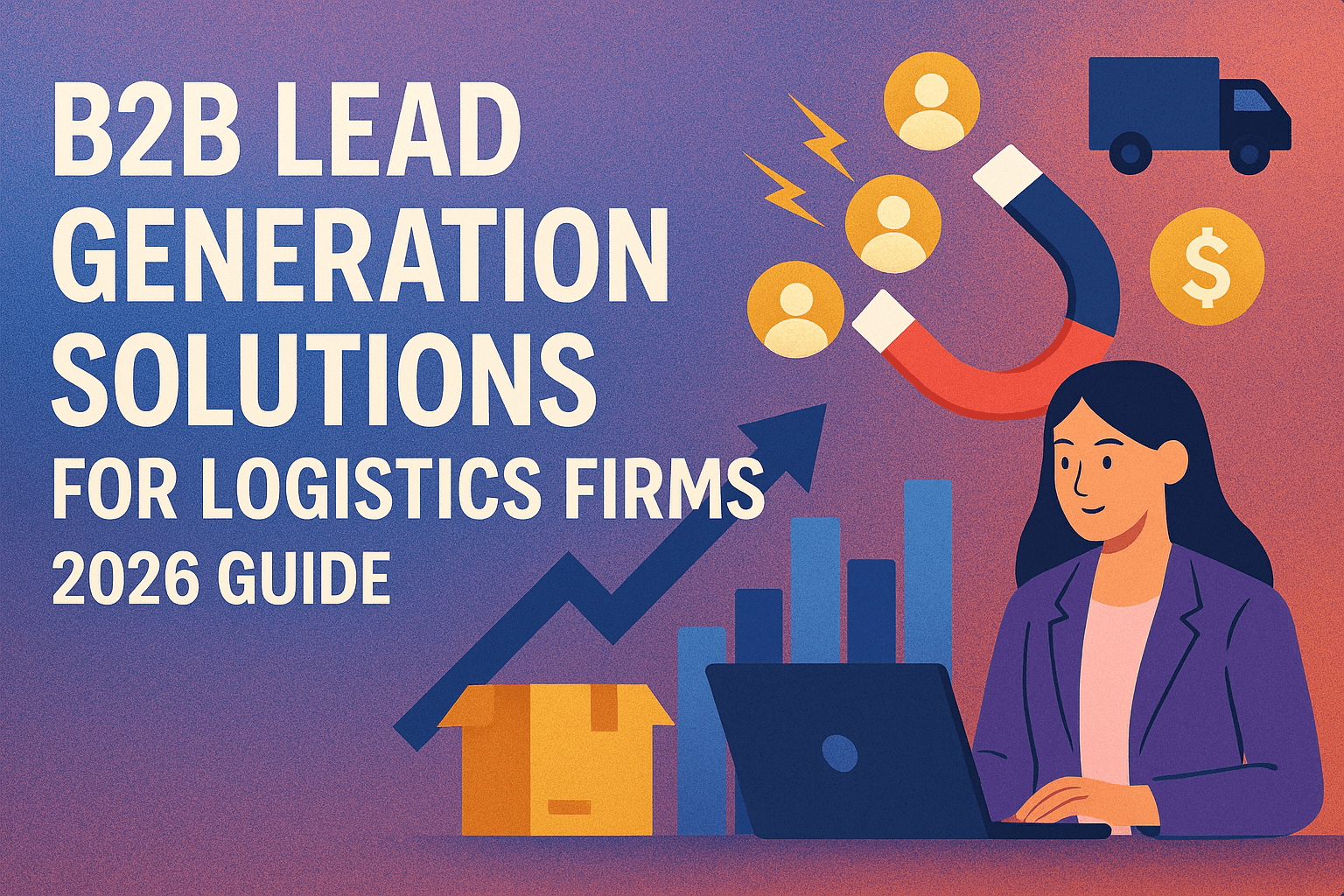


Boosting logistics firm growth through modern, effective B2B lead generation strategies.
The Importance of B2B Lead Generation in Logistics
The logistics industry continues to expand in 2026, but competition is rising just as fast. Whether you operate as a freight forwarder, trucking company, 3PL/4PL provider, or warehouse operator, your growth depends on one thing:
👉 A predictable, consistent flow of qualified B2B leads.
Without strong lead generation systems, logistics companies struggle to:
Close enterprise contracts
Maintain profitability
Scale on time
Compete with larger, tech-driven rivals
A logistics firm’s success now directly depends on how well it can identify, qualify, and nurture the right prospects before competitors do.
Challenges and Opportunities in Logistics Lead Generation
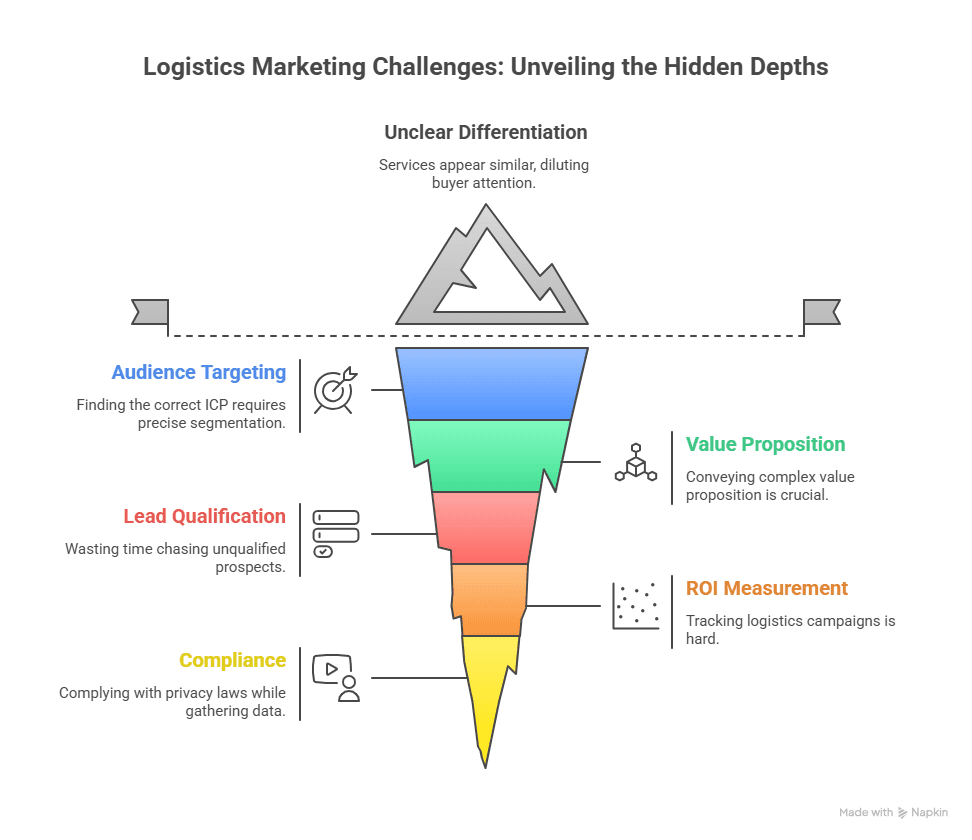
Logistics presents unique barriers that make lead generation more difficult than in other industries.
Key Challenges:
1. Intense Competition
Thousands of carriers, freight brokers, and 3PLs offer similar services. Differentiation is often unclear, which dilutes attention from buyers.
2. Targeting the Right Audience
Finding the correct ICP — such as supply chain directors, procurement heads, operations managers, or plant logistics leaders — requires precise segmentation.
3. Complex Value Proposition
Logistics buyers evaluate based on cost, reliability, visibility, service level agreements, technology stack, and niche expertise. Conveying these clearly is crucial.
4. Lead Qualification Difficulties
Not all inquiries are equal. Logistics firms waste immense time chasing unqualified prospects without a structured qualification process (BANT, CHAMP, MEDDIC, etc.)
5. Measuring ROI
Tracking logistics campaigns is hard: long sales cycles, multiple stakeholders, and scattered touchpoints make accurate attribution challenging.
6. Regulatory & Data Privacy Compliance
Logistics firms must comply with GDPR, CCPA, and global privacy laws while gathering and storing prospect data.
Quantifying the Impact
Research from Logistics Marketing Insight, 2026 found:
72% of logistics firms struggle to consistently generate high-quality B2B leads
This leads to an average 14–18% loss in annual growth potential
This confirms the urgent need for smarter, scalable, data-driven lead generation strategies.
Effective B2B Lead Generation Solutions for Logistics Firms
Success requires a combination of inbound, outbound, and data-driven systems.
1. Content Marketing
✔ Educational content builds trust.
Logistics buyers want providers who understand their operational challenges. You can attract them with:
Blogs on freight optimization, compliance, customs, and warehouse automation
Case studies showcasing reduced freight costs or improved OTIF
Whitepapers and reports
Webinars on industry trends
✔ SEO for organic visibility
Optimizing content for logistics-related keywords helps drive inbound leads searching for your services.
2. Account-Based Marketing (ABM)
ABM is highly effective for logistics firms targeting high-value enterprise accounts.
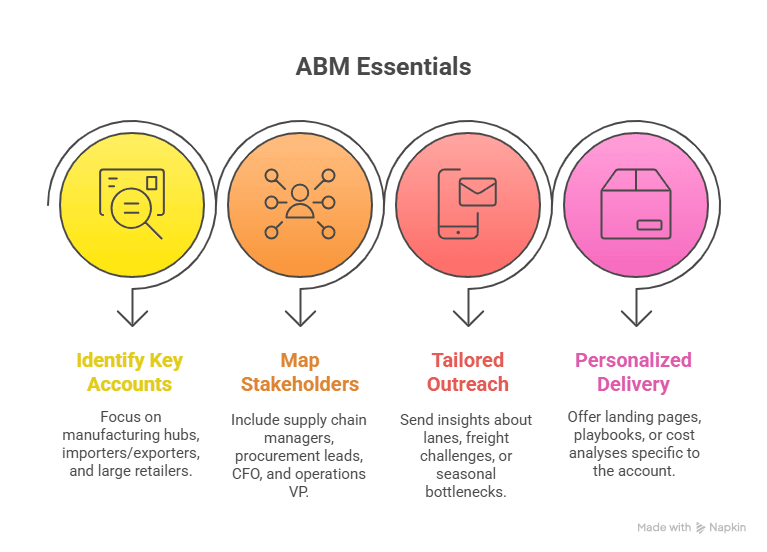
ABM Essentials:
Identify key accounts (manufacturing hubs, importers/exporters, large retailers)
Map stakeholders: supply chain managers, procurement leads, CFO, operations VP
Send tailored outreach with insights about their exact lanes, freight challenges, or seasonal bottlenecks
Deliver personalized landing pages, playbooks, or cost analyses
ABM increases relevance — and relevance boosts conversion.
3. Digital Marketing for Logistics
Search Engine Marketing (SEM)
Run targeted PPC campaigns around keywords like:
“3PL warehousing solutions near me”
“FTL freight carrier USA”
“Customs brokerage services”
Social Media Advertising
LinkedIn is the most effective platform for logistics B2B lead generation.
Target by:
Industry
Job title
Company size
Regions
Email Marketing
Nurture buyers with content that educates:
Freight planning tips
Route optimization insights
Cost reduction strategies
Email remains one of the strongest B2B conversion channels.
4. Partnerships & Industry Networking
Logistics grows through relationships.
Strong partnership opportunities include:
Freight forwarders
Warehouse providers
Customs brokers
Shipping lines
Technology vendors (TMS/WMS/visibility platforms)
Offline opportunities:
Trade shows
Logistics conferences
Procurement events
Supply chain roundtables
Partnerships expand your network and create referral pipelines.
5. Data-Driven Marketing
Data is now the backbone of logistics lead generation.
Top uses:
Identify buying triggers (new warehouse expansion, import surge, new distribution center)
Predict freight needs based on seasonality
Score leads using intent data signals
Track channel performance to optimize budgets
Data-driven logistics firms convert more leads at lower cost.
6. Automation & CRM Integration
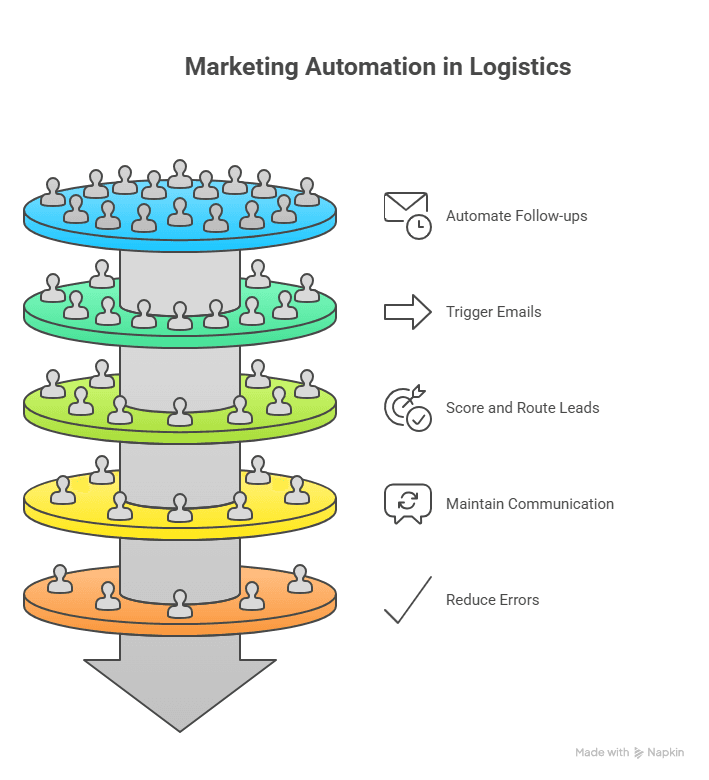
Marketing automation helps logistics firms:
Automate follow-ups
Trigger emails based on behavior
Score and route leads
Maintain consistent communication
Reduce manual errors
Improve outreach speed
Essential tools:
Category | Tools | Benefits |
|---|---|---|
Marketing Automation | HubSpot, Marketo, Pardot | Personalized workflows, nurture sequences |
CRM | Salesforce, Zoho, Dynamics 365 | Lead tracking, pipeline management |
Analytics | Google Analytics, Adobe Analytics | Campaign ROI, behavior insights |
Social Listening | Brandwatch, Talkwalker | Monitor industry trends & competitor activity |
7. Personalization at Scale
Logistics buyers expect personalized communication, not generic outreach.
Examples:
Tailored case studies for their industry
Offers based on freight volume
Messaging aligned to their lanes or regions
Personalized cost-saving assessments
Personalized outreach increases B2B conversion rates by 50–65% in logistics (2026 data).
Benefits of Implementing Strong Lead Generation Systems
When done correctly, logistics firms see:
✔ Increased revenue
High-quality leads → more closed contracts.
✔ Lower customer acquisition costs
Better targeting reduces wasted spend.
✔ Stronger brand authority
Content, data, and ABM build long-term credibility.
✔ Improved conversion rates
Structured nurturing produces sales-ready leads.
✔ Greater market share
A consistent pipeline allows logistics firms to scale faster.
Conclusion: Winning B2B Logistics Leads in 2026
Lead generation for logistics firms has shifted from cold calls and word-of-mouth to data-driven, personalized, multi-channel systems.
The firms that win in 2026 are the ones that:
Build a clear ICP
Use ABM for high-value accounts
Leverage automation
Invest in data and analytics
Create specialized, valuable content
Combine inbound + outbound + digital
By modernizing your B2B lead generation strategy, your logistics company can achieve sustainable growth, higher profitability, and a dominant position in your market.
If you'd like, I can also create:
✅ A shorter landing-page version
✅ A LinkedIn-optimized version
✅ A version with GrowthBeam CTAs
✅ A downloadable PDF version
Just tell me what you want next.