BLOG
6 Proven Ways to Generate More Logistics Sales Leads (2025 Guide for 3PLs, Freight Brokers & Transportation Teams)


If you want to shorten your sales cycle and generate predictable logistics leads, you need a system, not random prospecting. It starts with knowing exactly who your best buyers are — the people most likely to respond, engage, and convert into profitable shipping customers.
Below are six battle-tested strategies logistics professionals can use today to open more conversations, book more appointments, and fill their pipeline with high-quality logistics contacts.
1. Identify Your Target Market (Your Fastest Win)
If you want more logistics leads, the first step is clarity: who exactly are you trying to reach?
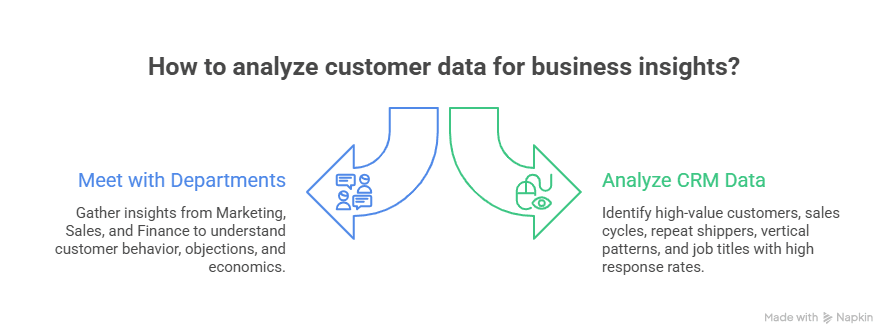
Start by meeting with:
Marketing (to understand behavior + traffic insights)
Sales (to understand objections + conversion patterns)
Finance (to understand margins + ideal customer economics)
Then analyze your CRM for:
Highest-value customers
Fastest sales cycles
Repeat shippers
Vertical patterns (retail, manufacturing, wholesale, e-commerce)
Job titles with highest response rates (Logistics Manager, VP Ops, Supply Chain Director)
If your CRM data is incomplete or outdated (which happens in logistics all the time), enrich it so you have a clean foundation before you scale outreach.
Knowing your exact market makes every other step easier.
2. Segment Your Personas (Personalized Messaging = More Responses)
Basic demographics are not enough. Logistics buyers respond when your message speaks directly to their daily pressure:
Delays
Freight costs
Carrier management headaches
Inventory timing
Last-mile reliability
Build real personas by asking:
What frustrates them most right now?
What KPIs are they responsible for?
How do they define “reliable logistics”?
What budget and timelines do they work with?
What mistakes do they fear making?
Once your personas are mapped, create:
Talk tracks
Voicemail scripts
Email templates
LinkedIn messaging
Pain-specific pitch angles
Segmentation is the difference between being ignored vs. getting replies within hours.
3. Define Your Services Clearly (Become a Niche Expert, Not a Generalist)
If you serve everyone, no one feels you truly understand them.
Logistics buyers prefer specialists — not generalist 3PLs that say “we can handle anything.”
If most of your customers are in:
E-commerce → Position yourself as a fulfillment specialist
Manufacturing → Highlight reliability + long-haul consistency
Retail → Emphasize inventory timing + replenishment
Food & beverage → Stress compliance + temperature control
Niche positioning builds trust faster and drastically improves response and close rates.
General logistics providers blend in.
Specialists stand out.
4. Build Targeted Prospect Lists (Not Random Data Dumps)
Once you know your audience, start building highly targeted lists that match the characteristics of your best customers:
Industry
Company size
Shipment volume
Region/lane
Decision-maker (title/seniority)
Technology (TMS, WMS, ERP)
Whether they outsource shipping or run in-house ops
These lookalike lists perform far better because you're contacting companies that match the behavior of your proven buyers.
High-quality prospecting lists = high-quality pipeline.
5. Spend More Time Selling, Less Time Researching (Data Accuracy = Speed)
Logistics is fast-moving. People switch jobs constantly. Routes change. Priorities shift.
If you rely on old, manually gathered data:
Your dial-out efficiency drops
Your emails bounce
Your CRM becomes polluted
Your sales cycle slows down
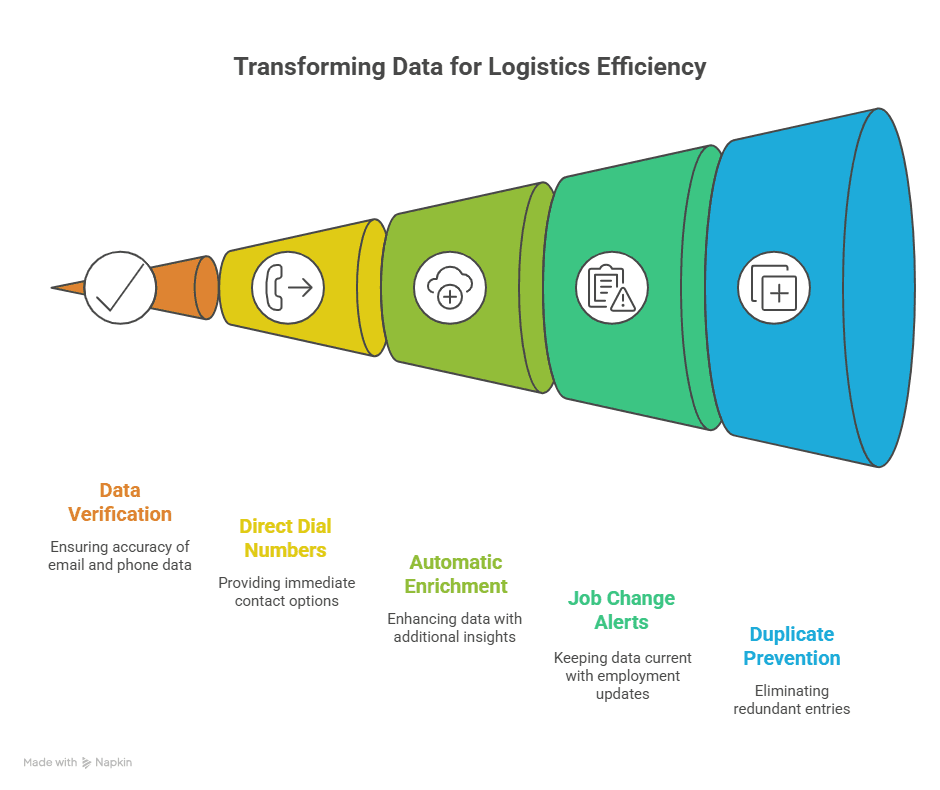
A modern logistics lead-generation system must include:
Verified emails
Direct-dial mobile numbers
Automatic enrichment
Job-change alerts
Duplicate prevention
When reps have verified contact data, they:
Reach decision-makers faster
Avoid wasted research time
Have cleaner CRM records
Reduce human error
Shorten the sales cycle dramatically
Accuracy = speed. Speed = more booked meetings.
6. Align Sales & Marketing (Your Buyers Research Before They Talk to You)
Logistics buyers rarely respond the first time you reach out — but they will research you afterward.
If they google your company and find nothing valuable, they disappear.
Marketing should support sales with:
Pain-specific blog topics
Case studies
Whitepapers
Social content
Industry-specific landing pages
Email nurture sequences
Inbound content works silently in the background:
warming buyers
answering objections
demonstrating your expertise
positioning you as a reliable partner
The best logistics pipelines come from sales-driven outbound + marketing-supported inbound.
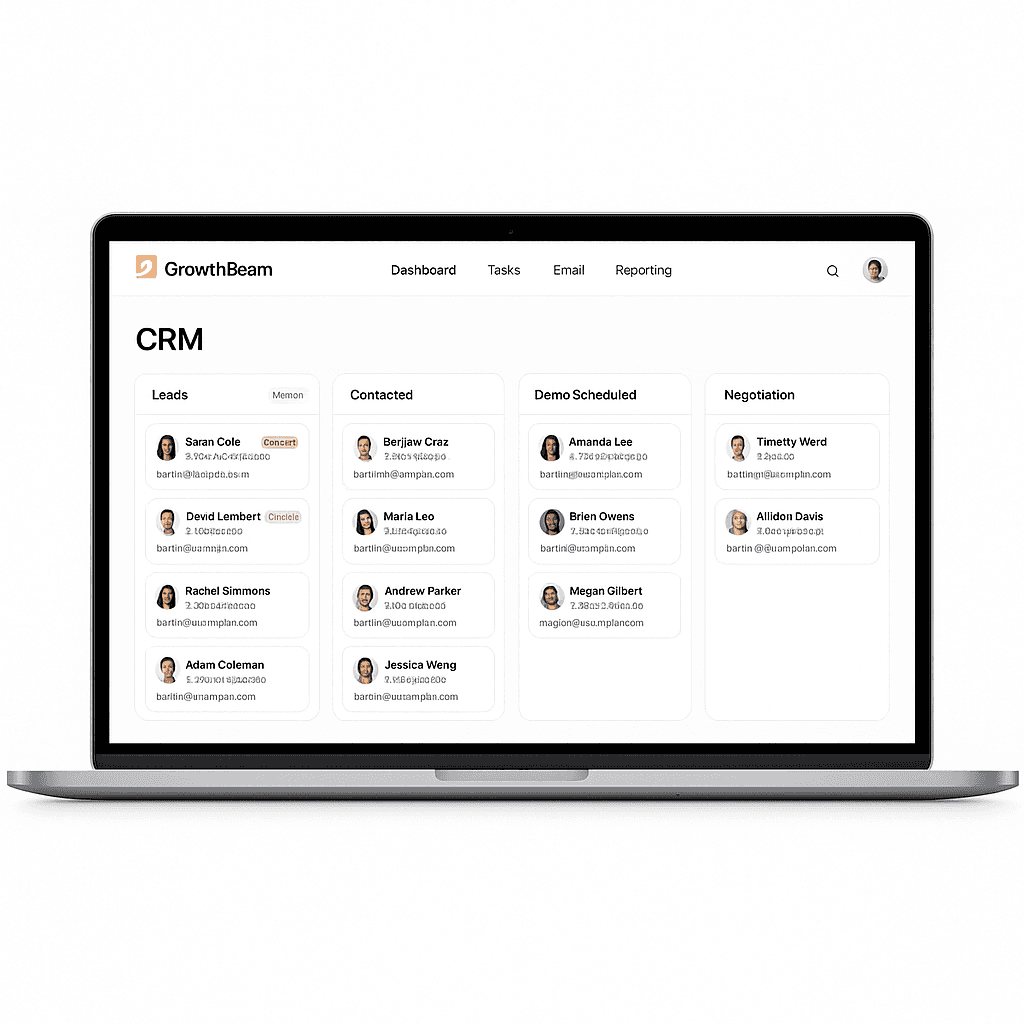
Where GrowthBeam Fits In (The Modern Way to Generate Logistics Leads)
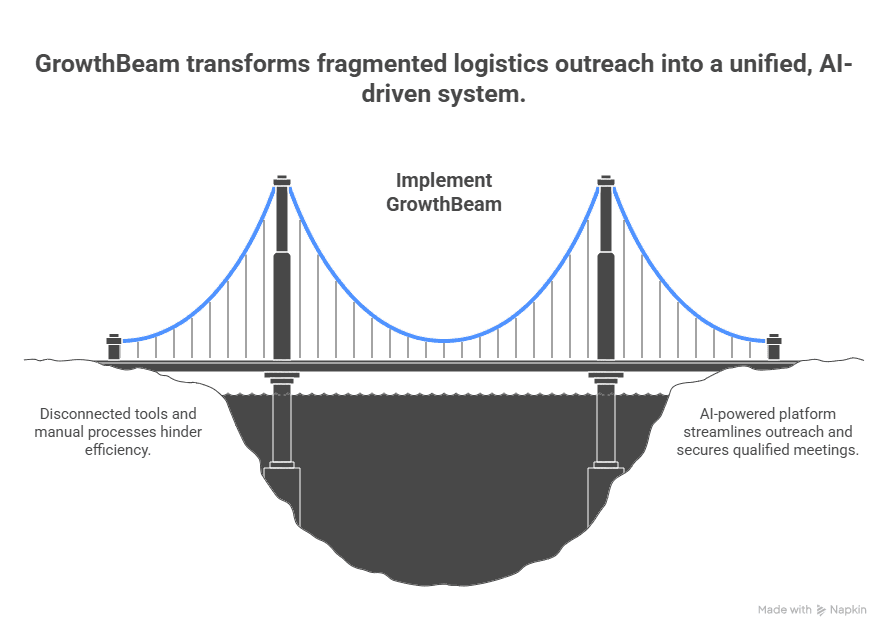
Instead of stitching together data providers, outreach tools, research methods, and manual processes, GrowthBeam gives logistics teams a single, AI-powered system to:
✔ Identify your ICP
✔ Build targeted logistics buyer lists
✔ Enrich contacts with direct dials
✔ Personalize emails & scripts across buyer personas
✔ Run multi-channel outreach (email + LinkedIn + calling)
✔ Book qualified meetings with procurement, operations & supply chain leaders
Logistics teams love GrowthBeam because it shortens the sales cycle, removes manual research, and fills the pipeline with decision-makers who actually respond.
If you're serious about growing your freight brokerage or 3PL in 2025, GrowthBeam is the fastest way to scale.
👉 Start a logistics lead-generation pilot with GrowthBeam — and get qualified meetings in your calendar.
Final Thoughts
Generating logistics sales leads isn’t just about effort — it’s about alignment, accuracy, and strategy. When you:
Know your target buyer
Segment messaging
Position yourself as a niche specialist
Build lookalike prospect lists
Leverage accurate data
Align sales with marketing
…you build a predictable pipeline that grows month after month.
Combine these practices with a modern platform like GrowthBeam, and you’ll reach decision-makers faster, with more relevance — and close more revenue.