BLOG
10 Ways to Generate More Quality Leads for Your Logistics Pipeline (2026 Playbook)


If your logistics or freight business is still relying on “word of mouth and hope,” you’re leaving capacity, revenue, and growth on the table. The good news: predictable, cost-effective lead flow is fully achievable with a simple system that combines process, data, and automation.
Below is a concise, field-tested 10-step playbook you can implement this week to attract higher-quality prospects, shorten sales cycles, and scale the pipeline.
1. Create a Formal Sales Process (Make lead generation repeatable)
A documented sales process turns chaos into predictable output.
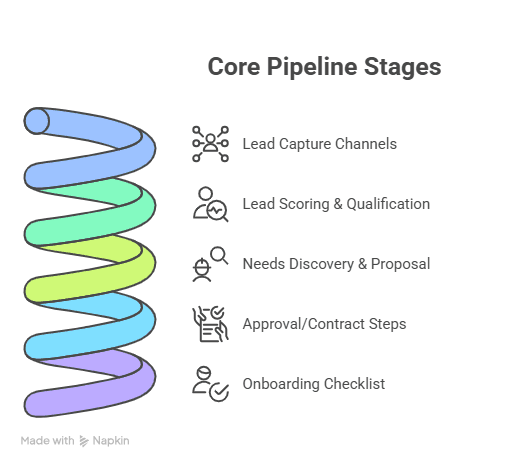
Core pipeline stages to document:
Lead capture channels (SEO, ads, marketplaces, events, referrals)
Lead scoring & qualification criteria
Needs discovery & proposal template
Approval/contract steps and onboarding checklist
Use a logistics CRM that enforces the process and prevents leads from slipping through the cracks.
Quick win: Map one repeatable sequence from “new inbound lead” → “qualified” → “proposal” and automate the reminders.
2. Identify & Target Key Accounts (Quality beats quantity)
Build an ICP (Ideal Customer Profile) and a prioritized key-account list.
Segment by:
Industry (e-commerce, manufacturing, retail)
Shipment volumes / lane economics
Tech signals (TMS, WMS)
Decision-maker titles (Head of Ops, Procurement, Logistics Manager)
Targeted outreach to lookalike accounts converts far better than mass outreach.
3. Focus on Inbound Marketing (Create self-serve demand)
Inbound gives lower-cost, higher-intent leads over time.
Priorities:
SEO-optimized pages for lanes and services (e.g., “LTL service Dallas → Chicago”)
Landing pages with clear CTAs and lead capture forms
Case studies, whitepapers, calculators (e.g., landed cost)
Google My Business + local citations for regional trucking
Inbound is slow to start but compounds — pair it with outbound for immediate pipeline.
4. Automate Your Outreach (Scale without losing personalization)
Manual outreach doesn’t scale. Automation does — when it’s personalized.
Automation must support:
Multi-channel cadences (email → call → LinkedIn → SMS)
Dynamic personalization tied to ICP fields
Auto-enrichment and job-change alerts
Rules to escalate hot leads immediately to reps
Stats don’t lie: automation improves conversion and forecasting accuracy.
5. Use AI-Powered Lead Platforms (Find intent, not just contacts)
Modern platforms combine data + intent so you contact buyers when they’re researching.
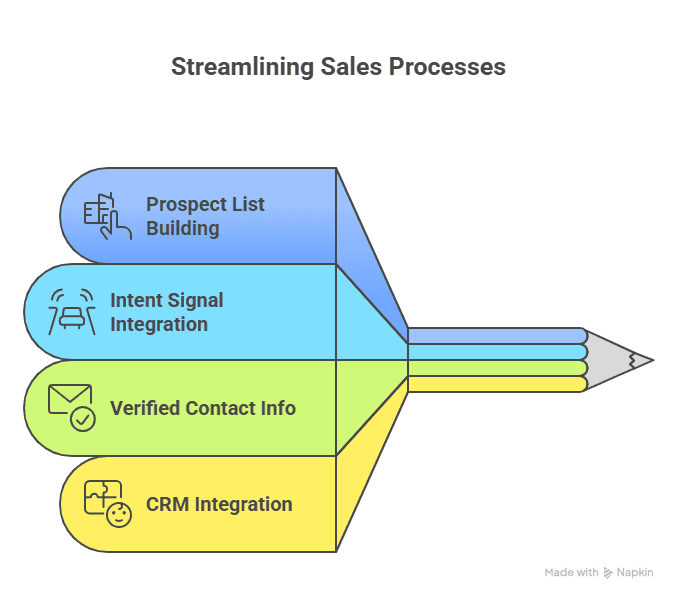
Good platforms will:
Build prospect lists by ICP in seconds
Pull intent signals and trigger outreach
Provide deliverable contact info (verified emails, direct dials)
Integrate cleanly with your CRM
Pick tools that are scalable, easy to use, and CRM-native.
6. Participate in Trade Shows & Events (High-touch acquisition)
Events convert — but only if you show up with a plan.
Do this:
Pre-book meetings with a targeted account list
Use concise one-pagers for role-specific value (ops vs finance)
Capture contacts into a “post-event rapid outreach” workflow
Run short follow-up sequences within 48 hours
Events are relationship accelerators — treat them like a focused outbound sprint.
7. Cold Call High-Quality Leads (Problem-first selling)
Cold calling still works when the list and opener are right.
Best practice:
Use verified numbers and contextual research before dialing
Open with a specific pain (“detention/demurrage savings,” “reducing LTL claims”)
Aim for a 15-minute ops discovery, not a demo
Log outcomes into CRM immediately for follow-up sequencing
A tight script + verified list = predictable meetings.
8. Refine Sales Prospecting & Nurturing (Always be relevant)
Segment leads by funnel stage and tailor outreach.
Examples:
Top-of-funnel: educational content and lane insights
Mid-funnel: case studies, ROI pages, pilot offers
Bottom-funnel: one-page proposals, SLA & pricing
Use CRM views and automation to ensure every lead gets the right next action.
9. Create Case Studies (Social proof that shortens sales cycles)
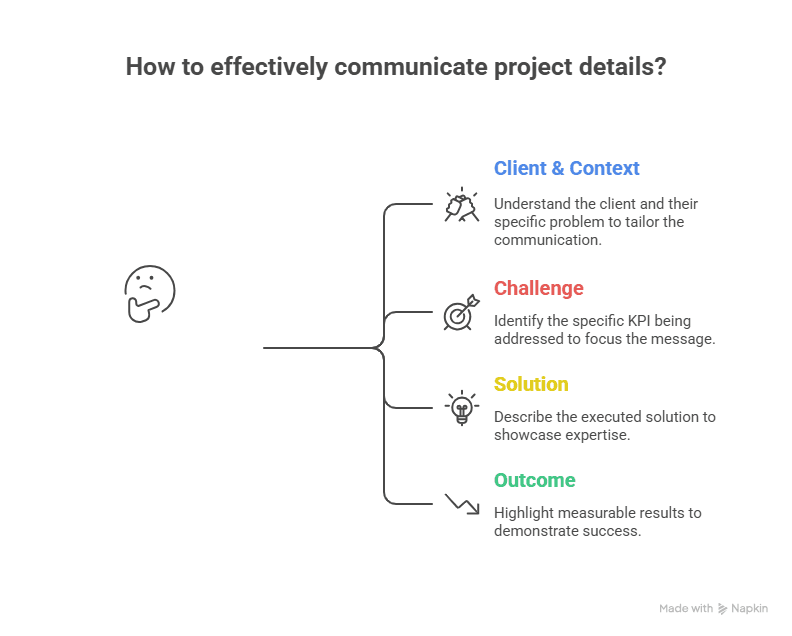
Case studies remove doubt. Structure them succinctly:
Client & context — who and what lane/problem
Challenge — specific KPI being hit (costs, delays, claims)
Solution — what you executed (routing, consolidation, tech)
Outcome — measurable results (%, $ saved, days cut)
Use short 1-page PDFs in outbound emails and full stories on your site.
10. Analyze, Iterate & Improve (Data-driven growth)
Track the small set of metrics that move the needle:
Meetings per 100 accounts
Meetings → SQL rate
Cost per meeting (CPM) and cost per SQL (CPSQL)
Time-to-first-response for inbound/marketplace leads
Proposal → close ratio
Run weekly experiments (subject lines, openers, intent thresholds) and scale winners.
TL;DR Playbook (Start this week)
Document 1 repeatable sales flow.
Build a 100-account Tier-A list from your ICP.
Launch a 4-week multi-channel outbound cadence (email + call + LinkedIn).
Automate enrichment + hot-lead routing.
Publish 1 lane-specific case study and use it in outreach.
Track CPM, meetings, and proposal conversion — iterate weekly.
Why GrowthBeam is the fastest path from activity to revenue
You can stitch tools and still be slow. Or you can use a platform built specifically to convert logistics intent into booked meetings.
GrowthBeam gives logistics teams:
ICP-driven list building — find the right shippers fast.
Intent + data fusion — prioritize buyers who are actively researching.
Phone-verified contacts & enrichment — higher connect rates.
Personalized multi-channel cadences at scale — real personalization, not token fields.
CRM-native workflows & reporting — no manual syncs.
Managed pilot option — get the first qualified meetings while your team focuses on closing.
If you want a 30-day pilot that delivers initial meetings, scripts, and the KPI dashboard to measure impact — GrowthBeam will run it and hand you the repeatable playbook.
👉 Book a GrowthBeam pilot — we’ll build the Tier-A list, run intent-prioritized outreach, and deliver qualified meetings you can convert.
Need this delivered as WordPress-ready HTML, 3 email cadences, or two one-page lane proposals? Say which one and I’ll drop it in your preferred format.