BLOG
10 Proven Ways to Generate Logistics Sales Leads (2025 Playbook)


If you sell logistics, freight, 3PL, warehousing, or transportation services, you know one truth: buyers don’t respond to generic outreach. They respond to relevance, timing, and proof. The most effective logistics lead-generation programs combine data (who to contact), intent (when to contact), and personalization (how to contact). Below are ten tactical methods you can put into action this week — plus exact messaging snippets and KPIs so you can measure what matters.
1. Start with a razor-sharp ICP and key-account list
Too many teams spray and pray. Best-in-class logistics teams begin with an Ideal Customer Profile (ICP) and a prioritized key-account list.
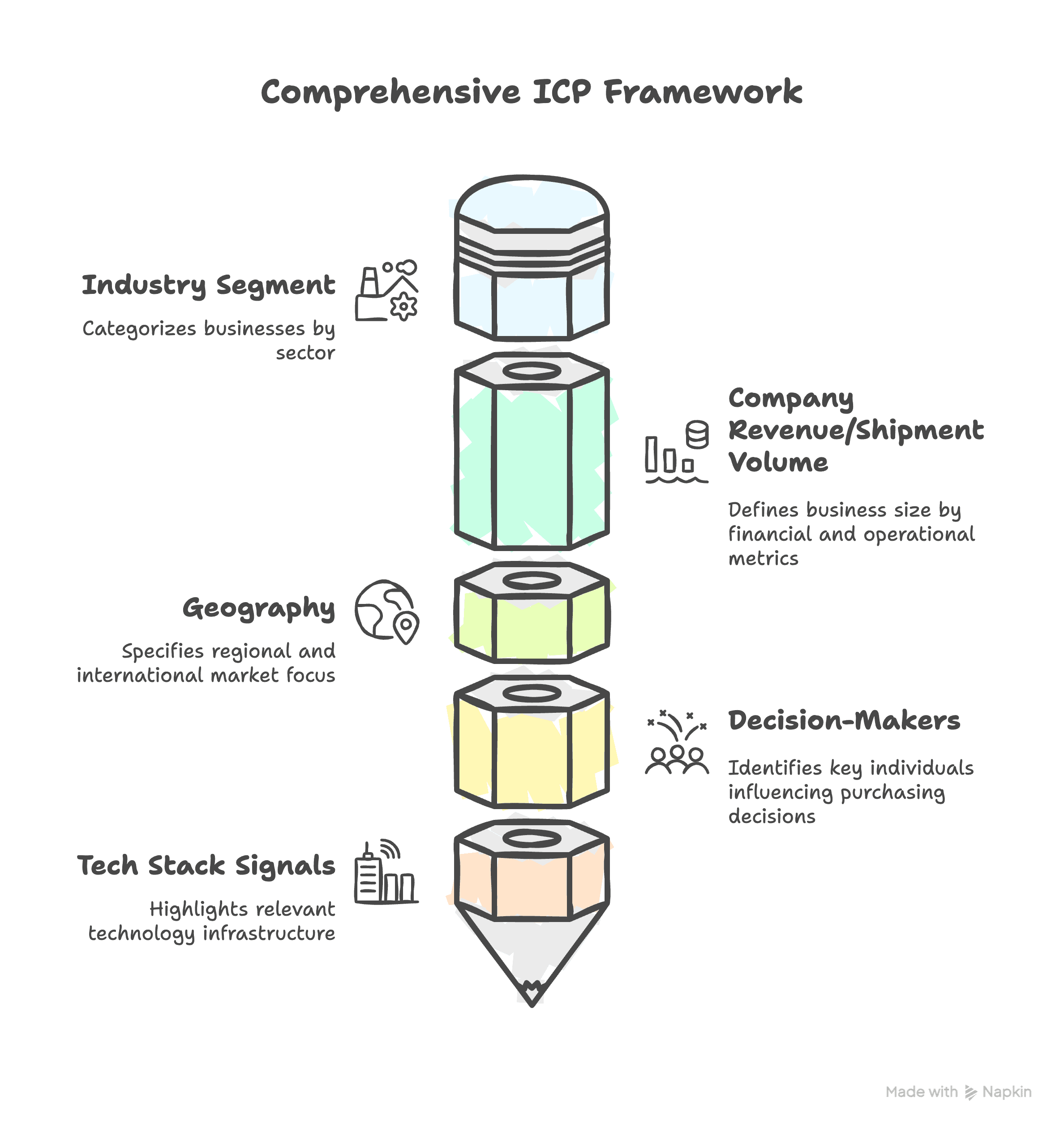
ICP fields to include:
Industry segment (e.g., retail, industrial manufacturing, e-commerce)
Company revenue / shipment volume bands (e.g., $50M–$250M; >500 shipments/mo)
Geography (US regions, cross-border lanes)
Decision-makers (COO, Head of Logistics, Director of Supply Chain, Procurement)
Tech stack signals (TMS, WMS, ERP)
Quick action: build a 100-account target list (Tier A) and a 300-account Tier B list. Use the Tier A list for ABM-style outreach and personalized offers.
KPI: % of target accounts engaged weekly; goal 10–15% in month 1 pilot.
2. Use intent data to prioritize outreach (timing beats volume)
Intent signals tell you who’s actively researching shipping, fulfillment, freight audits, carrier consolidation, or last-mile optimization. Prioritize prospects showing these behaviors — your reply and meeting rates go up dramatically when outreach is timely.
How to apply: feed intent to your outreach platform and create hot/ warm/ cold queues. Push hot prospects into immediate multi-touch cadences.
KPI: Meeting rate for intent-based outreach vs. cold (expect 2–4x lift).
3. Cold call the right people — with a problem-first opener
Cold calling still moves the needle in logistics — but only when you call verified numbers and open with an immediate business pain.
Cold-call opener (30 seconds):
“Hi [Name], quick one — we’re helping [similar company] reduce detention and demurrage by up to 30% on port-bound shipments. I’m calling because I saw you’re handling [lane/volume/situation] and thought this might save you real cost. Is this something your team is tracking?”
Tactics:
Use phone-verified lists (mobile or direct lines).
Script the problem first; follow with one short proof point.
Book a 15-minute ops call, not a demo.
KPI: Connect-to-meeting ratio; aim 8–12% in month 1.
4. Build a repeatable multi-channel prospecting cadence
Complex logistics deals need multiple touches. Design a 3–6 week cadence combining phone, email, LinkedIn and value content.
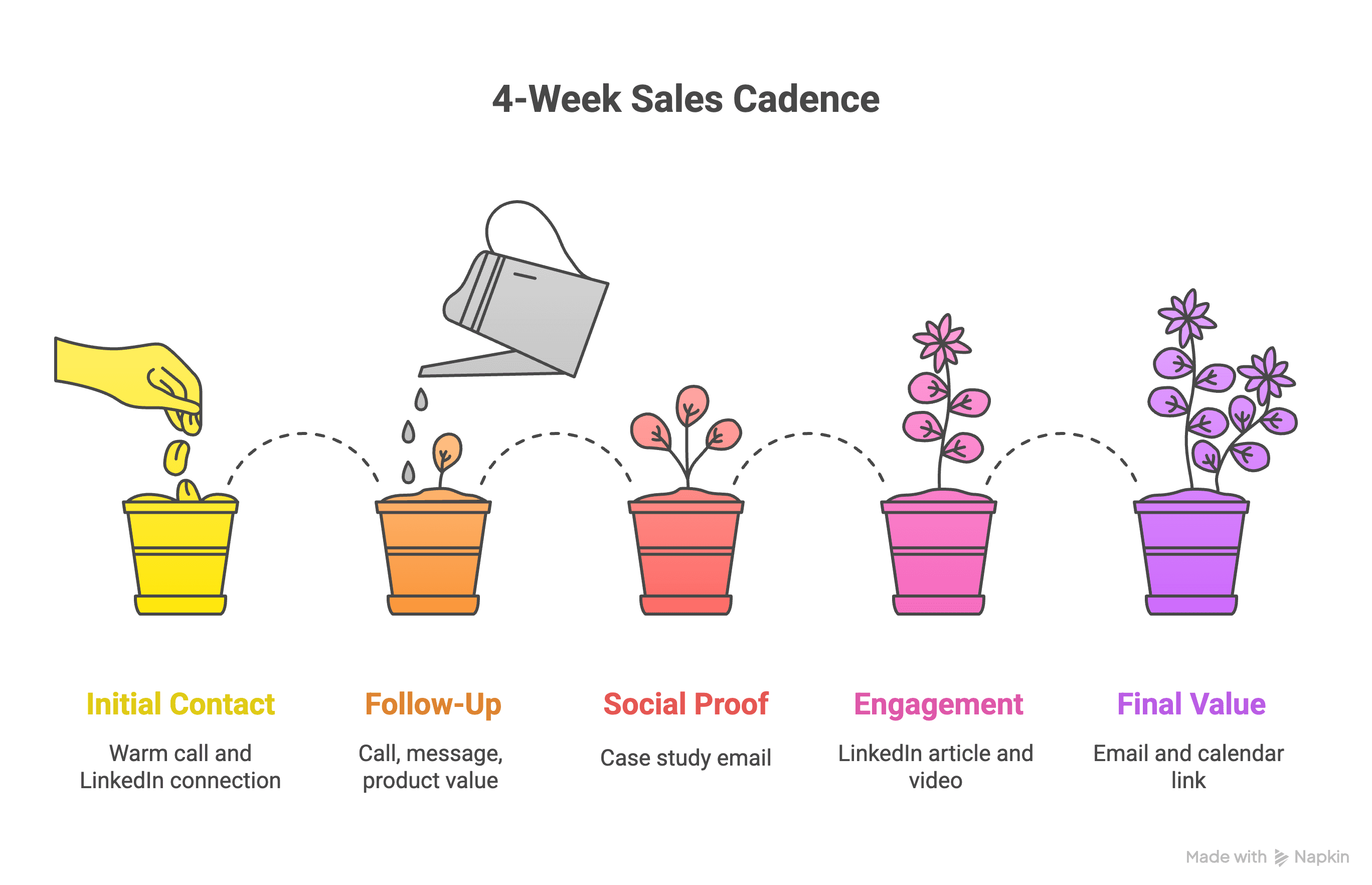
Example 4-week cadence (high level):
Day 0: Warm call + short personalized email + LinkedIn connection
Day 3: Follow-up call + 1-line message + product value one-pager
Day 7: Case study email (customer with similar lane/problem)
Day 14: LinkedIn article + video message
Day 21: Final value email + calendar link
Automate the cadence but make each touch personalized (one unique insight per contact).
KPI: Replies / meetings per 100 prospects; baseline expectation 6–10 meetings/100 for a well-targeted cadence.
5. Multi-thread accounts — engage all stakeholders early
Logistics buying is multi-stakeholder. Engage operations, procurement, finance and the C-suite simultaneously.
Play:
Map 3–4 stakeholders per account.
Send tailored one-line emails to each role highlighting their specific KPI (ops: on-time pickup; finance: freight cost savings; CEO: revenue impact).
Use low-friction collateral for each role (one-pager, ROI slide, 60-second video).
KPI: Meetings that include ≥2 stakeholder roles — forecast higher close probability.
6. Expand into adjacent markets and verticals methodically
If you dominate a local lane or vertical, replicate the playbook into similar segments. Examples:
Move from regional retail to ecommerce in neighboring states.
Add warehousing services to customers currently using only freight services.
Run a 60-day micro-pilot in each new market: 500 prospects, 3-touch cadence, one case study variant.
KPI: Cost per meeting and close rate in new market vs. original market.
7. Competitive intelligence — steal and improve what works
Monitor competitors’ messaging, landing pages, LinkedIn content and offer structure. Don’t copy — upgrade.
Tactical moves:
If a competitor emphasizes “same-day dispatch,” run a test variant highlighting “guaranteed pickup windows.”
Scrape competitor job listings to identify scaling markets and new service demand.
KPI: % lift in conversion after swapping headline/messaging (A/B test).
8. Incentivize referrals — make advocacy frictionless
Referral programs convert higher and cost less per acquisition. Offer practical incentives: service credits, fee discounts, or shipment credits.
Referral flow:
Email current customers a one-click referral link + short messaging template.
Reward after the referred client signs and ships.
KPI: Referral-to-close conversion and CAC on referred deals.
9. Build and promote hyper-relevant case studies
Case studies close deals in logistics. They prove you can execute on real constraints: lead times, international customs, oversized cargo.
Structure:
Context: the customer and lane/volume
Problem: constraints faced (time, cost, complexity)
Solution: what you did differently (routing, consolidation, tech integration)
Results: % cost savings, days shaved, on-time improvement
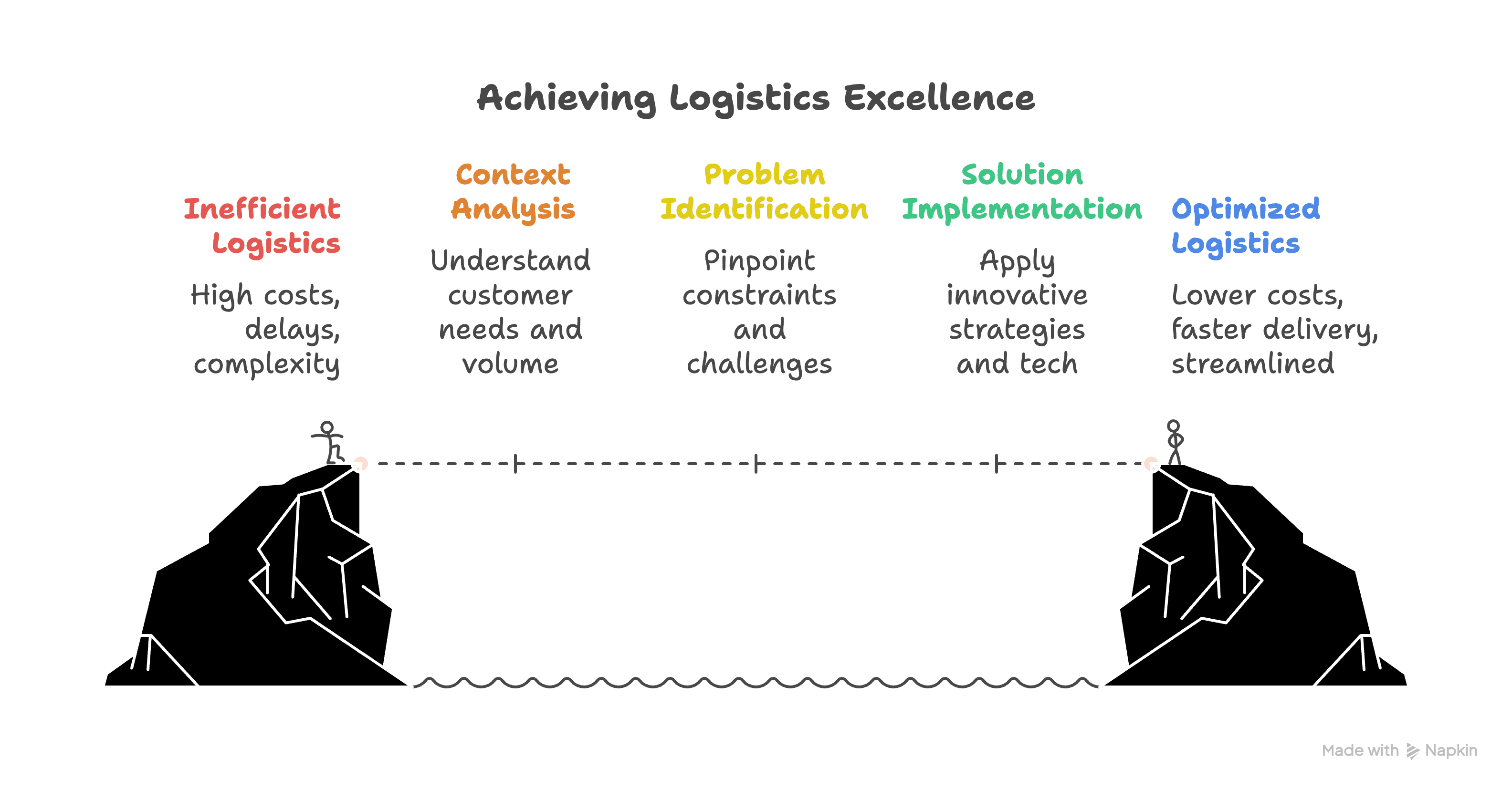
Use case studies in cold emails, LinkedIn posts, and the decision-stage nurture streams.
Sample email subject: How we cut cross-border freight costs 23% for [Company]
Body tease: “Short story: we moved 23 tons in 5 days vs. the usual 12 — here’s how…”
KPI: Meetings sourced from case-study outreach.
10. Offer customized, high-value proposals for priority accounts
A one-page, tailored offer often wins when accounts are evaluating several 3PLs. Include:
Specific pain points solved
Sample SLA & pricing tiers
ROI or cost-saving projection
Implementation timeline
Send a preview in your outreach and invite decision-makers to a 15-minute “proposal walkthrough.”
KPI: Proposal-to-close conversion rate.
Playbook: Messaging + Subject-line swipes you can use today
Email subject lines:
“[Name], quick freight idea for your [lane] shipments”
“3 ways to save on detention at [port name]”
“[Competitor] had this problem — fixed in 2 weeks”
LinkedIn opener:
“Hi [Name] — noticed you manage [lane/ops]. We helped [similar company] trim carrier costs by 18% — happy to share a one-pager?”
Cold-call openers:
“Quick question — are you tracking detention costs on your West Coast imports? We’ve helped peers cut those by 20%.”
Measurement: KPIs that actually matter for logistics lead gen
Focus on these metrics:
Meetings per 100 target accounts
Meetings → SQL conversion rate
Cost per meeting (CPM) and cost per SQL (CPSQL)
Time-to-first-meeting (speed matters with intent signals)
Proposal-to-close ratio
LTV of customers acquired via outbound/referral
Run weekly reviews, and optimize one variable at a time (subject line, phone script, intent threshold).
Why GrowthBeam accelerates logistics pipeline (without the overhead)
You can execute all the tactics above manually — or you can use a platform built for speed and precision.
GrowthBeam combines:
Intent + data fusion so you contact buyers when they’re researching freight or fulfillment.
Phone-verified contact enrichment to boost cold-call connect rates.
Hyper-personalized cadences that scale (real personalization, not token fields).
Multi-thread workflows to reach ops, procurement and finance simultaneously.
Managed option so you can plug in a pilot and have meetings booked while your internal team focuses on closing.
If you want to scale logistics outreach faster, with predictable meetings and measurable ROI, GrowthBeam is optimized for that path.
👉 Ready to test a 30-day logistics pilot? GrowthBeam will build a Tier-A account list, run an intent-prioritized cadence, and deliver the first set of qualified meetings — with playbook, scripts, and analytics included.
Final checklist — launch in 7 days
Build ICP & 100 Tier-A target accounts
Connect intent streams and prioritize hot leads
Prepare 4-week multi-channel cadence (phone + email + LinkedIn)
Create 2 role-based case studies (ops + finance)
Draft a one-page custom offer template
Set KPIs and weekly reporting cadence
Run a 30–60 day pilot, measure CPM and close data, and scale the winners.